
Ongoing decision training for the realities of police work
eTRAIN 1-on-1 provides agencies with a cost-effective and more efficient way to continue developing officers’ or cadets’ decision-making skills during and after the academy. Officers work through realistic body-worn camera scenarios, respond to what they see, review feedback through after-action reporting, and continue training based on the areas that need reinforcement most.
Instead of treating 1-on-1 training as a completion exercise, eTRAIN helps agencies make it more targeted, measurable, and relevant to the decisions officers make in the field.
Why eTRAIN 1-on-1
Most agencies need in-service training to do several things at once: reinforce policy, sharpen judgment, fit into limited schedules, and support officers with different strengths and experience levels.
eTRAIN helps solve that by turning body-worn camera encounters into repeatable decision-training opportunities. Officers do more than review content. They assess situations, respond to cues, evaluate options, and receive immediate feedback in a format that is closer to the way field decisions actually happen.
This makes 1-on-1 training more useful for both officers and supervisors.
How eTRAIN 1-on-1 Works
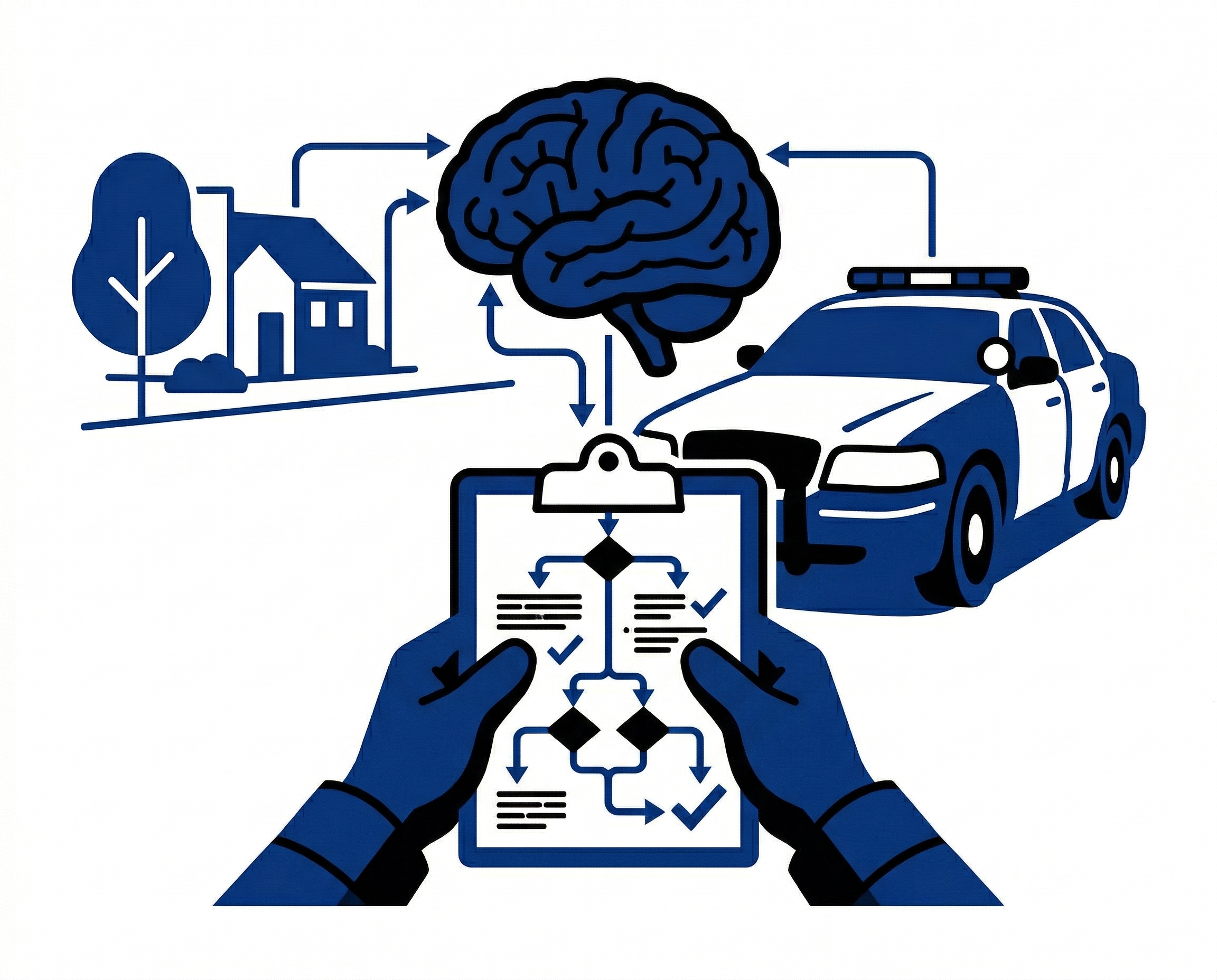
 Officers begin with assigned or available scenarios based on agency priorities, training cycles, or individual needs.
 Each scenario starts with operational background such as dispatch details, CAD notes, or incident context. This frames the decision the way officers would actually encounter it.
 Officers work through body-worn camera footage and respond to prompts that may involve selecting an action, identifying a cue, assessing risk, or choosing among policy-driven options.
 Once the scenario is complete, officers receive structured feedback that helps them understand what they got right, what they missed, and where improvement is needed.
What eTRAIN 1-on-1 Covers
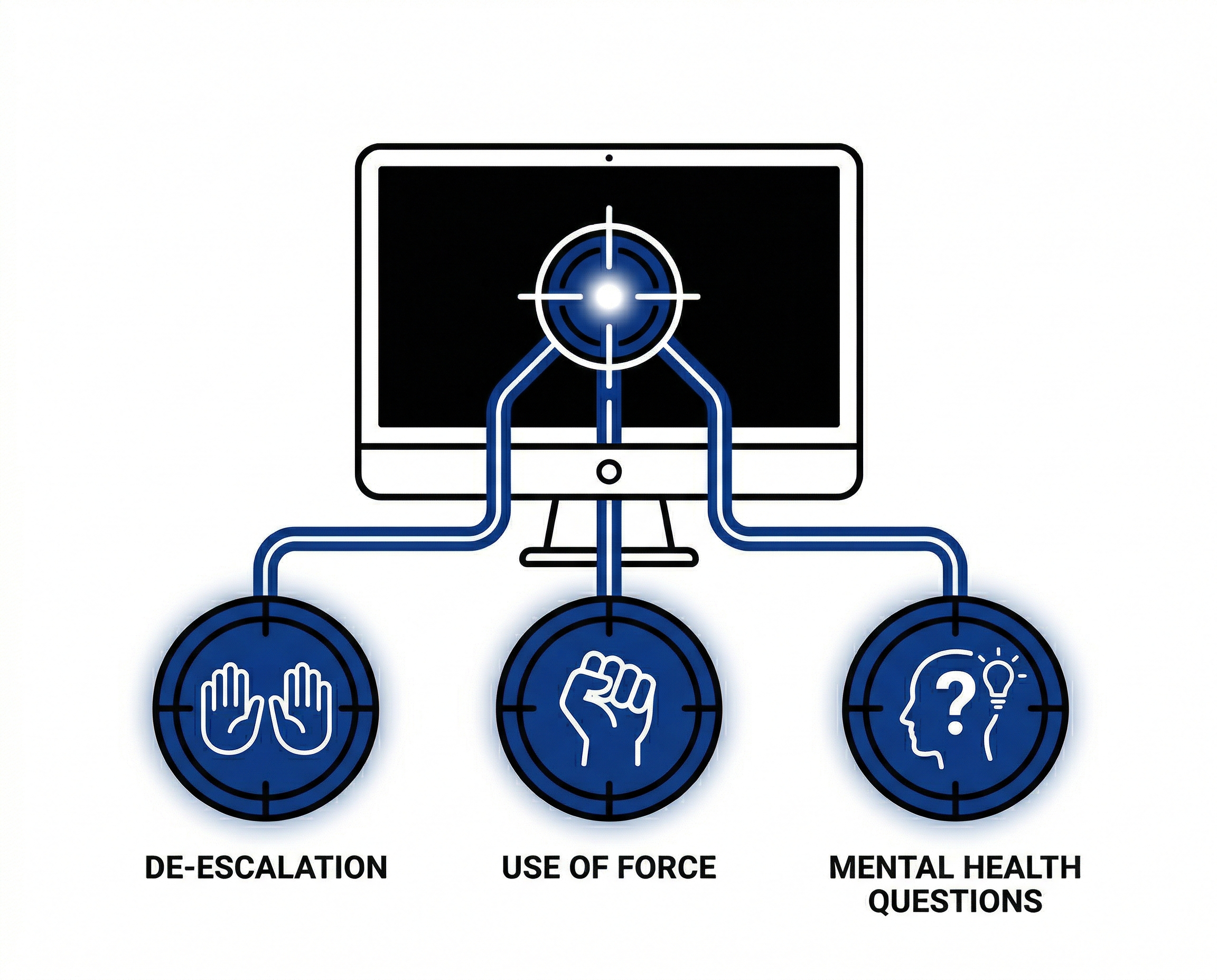
eTRAIN 1-on-1 can support a broad range of decision areas, including:
This flexibility allows agencies to use one platform across both recurring annual priorities and focused operational issues.

Why agencies use eTRAIN 1-on-1
Built for multiple stakeholders

eTRAIN 1-on-1 supports a more modern and measurable training approach that helps leadership move beyond completion logs and toward stronger readiness.

The platform gives trainers a better way to assign scenarios, reinforce priorities, and identify where officers may need more support.

eTRAIN 1-on–1 shows that the platform can support recurring agency-wide training in a scalable format, not just one-time classroom delivery.
Why this matters
The pressures on training are often budgetary, logistical, and time-based. Agencies need high-quality training that strengthens decision-making without disrupting operations or requiring massive expenditures.
eTRAIN 1-on-1 directly addresses these constraints:
- Cost-Effective Deployment: Since eTRAIN requires no special hardware and can be accessed on officers’ existing devices (smartphones, tablets, desktops), agencies eliminate the significant capital expenditure and maintenance costs associated with specialized simulation equipment or new hardware rollouts.
- Optimal Use of Training Time: By allowing officers to complete scenario-based training on their own devices and at their own schedules, eTRAIN minimizes the logistical cost of pulling officers off-duty for full-day classroom events. This efficiency translates directly into reduced overtime pay and maximizes the time officers spend in the field.
This flexible, measurable, and hardware-light approach makes eTRAIN In-Service a practical solution for modernizing training while respecting budget realities.